
Fostering Disability-Inclusive Societies: Stitching Together Stories, Systems, and Evidence
Years ago, while waiting outside an examination centre in Bengaluru, nervously flipping through notes, I noticed a man selling tea from a small, unusual-looking vehicle parked under a tree.
He moved effortlessly around his compact mobile stall, chatting with students, handing out steaming cups of chai. Only when he turned to serve me did I realise he had lost both his legs. What struck me wasn’t his impairment, but his confidence. He took orders with ease, joked about exam stress, and clearly knew half his customers by name.
Much later, I came across his story in The Better India (The Better India, n.d.). His name was Umesh — once a driver, whose life had turned upside down after a road accident. For years, he struggled to earn a living until he discovered Sunny Splendor — a solar-powered mobile shop designed by Hari Vasudevan of Ostrich Mobility. It allows people with disabilities to run small businesses wherever opportunity takes them.
With this innovation, Umesh could move to busier areas, follow his customers, and grow his income. He said he now earned enough to send his children to a good school. His story is personal, but it also speaks to something larger — how ingenuity, inclusive design, and dignity can come together to transform lives.
On World Disability Day 2025, with its theme “Fostering disability-inclusive societies for advancing social progress,” I find myself thinking about people like Umesh — and the many others whose stories never make the news.
People with disabilities are routinely shut out of education, work, and healthcare not only by steps and stairs but by stigma — by the quiet insistence that they are “less capable” or “less complete.”
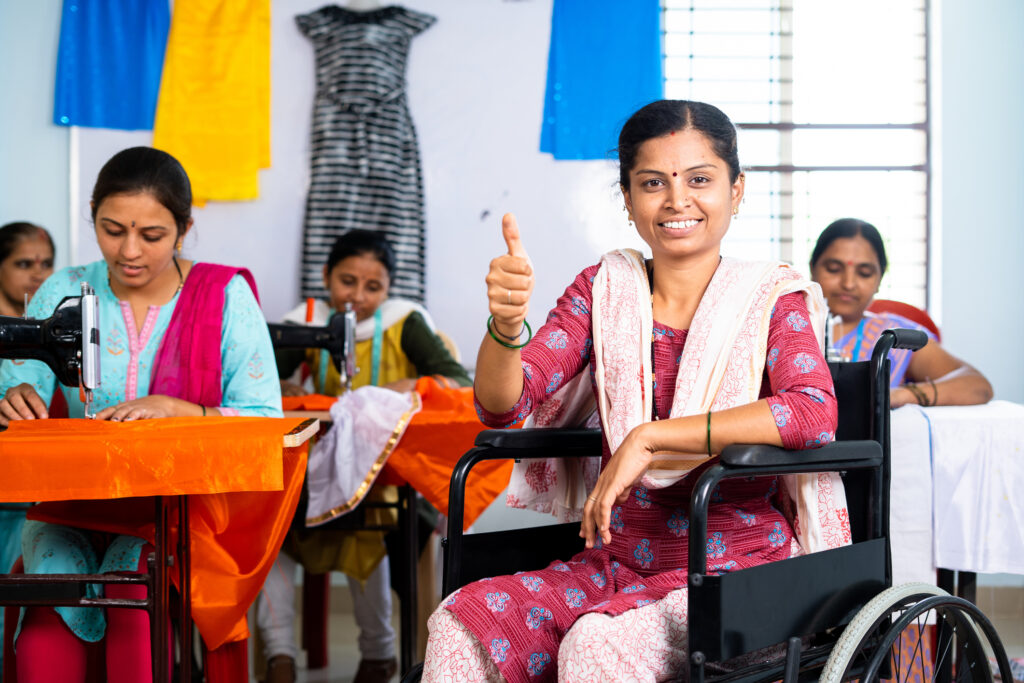
The Campbell Systematic Review on social inclusion (Saran et al., 2023) examined evidence from 16 low- and middle-income countries. It found that when people with disabilities joined peer groups, social-skills programmes, or family support initiatives, their relationships, confidence, and participation improved meaningfully. Yet most interventions still focused on helping individuals “fit in” rather than transforming the systems that exclude them. In short, we continue to ask people with disabilities to do most of the adapting.
Classrooms often mirror the inequalities of the world outside. Children with disabilities in LMICs are far less likely to attend school — and even when they do, they are frequently left on the margins of learning.
Another Campbell Review on education (Hunt et al., 2025) pulled together 28 studies from India, South Africa, Brazil, and Uganda. The good news: tailored teaching methods, accessible learning materials, and structured reading programmes significantly boosted literacy and cognitive skills. The difficult truth: most of these efforts focused on “fixing” the child rather than redesigning schools themselves.
Very few programmes trained teachers at scale, improved accessibility, or tackled discriminatory attitudes. One teacher in an inclusive-education project summed it up perfectly: “When I include a child with a disability, the whole class becomes kinder.”
Inclusive classrooms teach more than academics; they teach empathy. But for that to happen everywhere, inclusion must be built into education systems — not added later as a special initiative.
Back on that Bengaluru street, Sunny Splendor is more than a clever piece of engineering — it’s a livelihood on wheels.
The Campbell Review on livelihoods (Hunt et al., 2022) studied programmes in Bangladesh, Nigeria, Ethiopia, Brazil, China, and Vietnam. Vocational training, supported employment, and microcredit schemes all helped people with disabilities gain jobs, skills, and confidence. Yet, across the research, the evidence base remained thin and uneven. We still know too little about what works best, for whom, and at what cost.
Despite those gaps, these interventions share something powerful: they recast people with disabilities not as dependents, but as workers, innovators, taxpayers, and entrepreneurs. Work is more than income; it’s belonging.
Even when education and livelihood opportunities improve, another barrier often remains stubbornly high: the health system. Across low- and middle-income countries, people with disabilities continue to face systemic barriers to healthcare — from inaccessible clinics to untrained providers and discriminatory practices that quietly exclude them from essential services.
The recently launched Lancet Commission on Disability and Health (The Lancet Commission on Disability and Health, 2025) is a landmark initiative dedicated to creating disability-inclusive health systems that leave no one behind. As part of this global effort, an ongoing evidence and gap map is being developed to identify what is known — and what remains unknown — about interventions that improve access to general healthcare for people with disabilities.
It can be tempting to see rigorous evidence and human stories as two different worlds – one emotional, one technical. But the most powerful moments are when they meet.
When a meta-analysis shows that social inclusion interventions can significantly improve relationships and community participation, I think of the young woman in India who told me she joined a dance group and, for the first time, “felt seen.” When the education review concludes that individual-level interventions are insufficient, it calls for a twin-track approach combining child support and system reform. I picture a teacher rearranging her entire classroom so that every student can see the board and each other. When the livelihoods review notes that employment rates for people with disabilities remain far below those of people without disabilities globally, I think of Umesh in his solar-powered shop, not waiting for charity, but running a business.
Evidence gives us patterns. Stories give us reasons to care about those patterns.
If we take the World Disability Day theme seriously, “fostering disability-inclusive societies” is not a slogan – it is a design brief. It means:
- Schools that assume children will have different bodies, minds, and learning styles – and are built for that from the start.
- Workplaces that treat reasonable accommodation as routine, not heroic.
- Cities and villages where transport, buildings, and information are readily accessible.
- Health systems where people with disabilities are visible in data, central in design, and respected in every consultation.
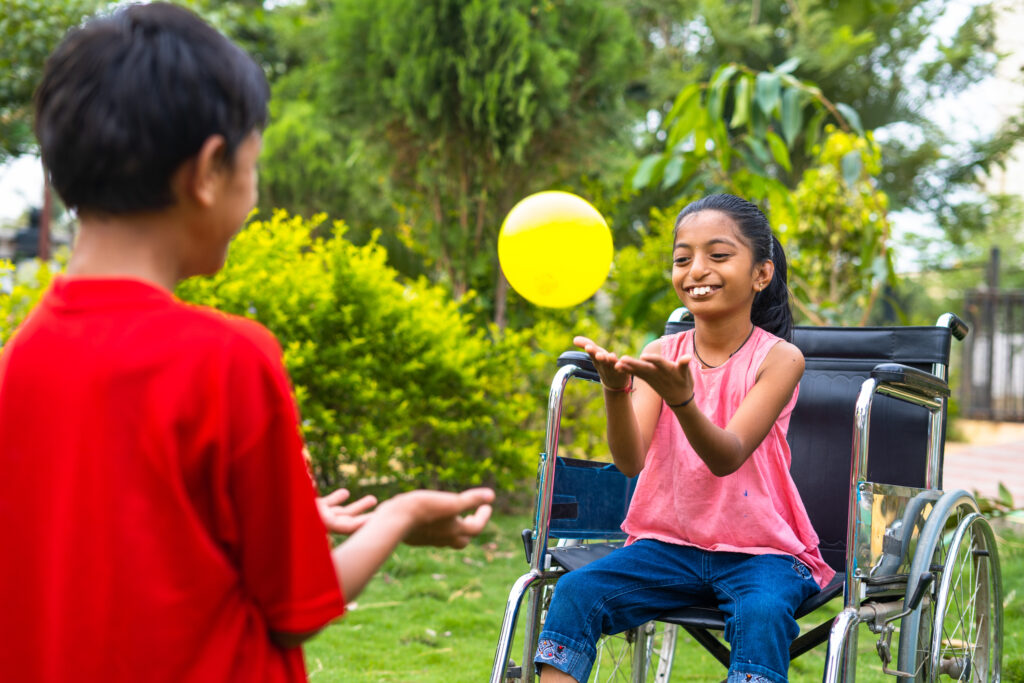
Evidence gives us early signals of what works in education, livelihoods, and social inclusion in LMICs and helps connect those dots to health systems. Sunny Splendour shows how engineering can open economic doors. And countless everyday acts – a teacher’s choice, a policymaker’s decision, a neighbour’s attitude – will determine whether those doors stay open.
I often think back to that exam morning in Bengaluru. I don’t remember my exam questions. I do remember the taste of Umesh’s overly sweet tea, the warmth of his greeting, and the small crowd gathered around his solar-powered cart. In that moment, the street outside an exam hall was not just a place to pass time – it was a glimpse of a different kind of society, one where design and dignity align so people can live the lives they choose.
This World Disability Day reminds us of a shared responsibility:
to let stories inspire empathy and evidence drive action.
Because truly inclusive societies don’t just “accommodate” people with disabilities.
They are built with them, from the beginning.
References
Better India. (n.d.). Sunny Splendor mobile shop. https://thebetterindia.com/45293/sunny-splendor-mobile-shop-persons-with-disabilities-livelihood/
Hunt, X., Saran, A., Banks, L. M., White, H., & Kuper, H. (2022). Effectiveness of interventions for improving livelihood outcomes for people with disabilities in low- and middle-income countries: A systematic review. Campbell Systematic Reviews, 18(3), e1257. https://onlinelibrary.wiley.com/doi/full/10.1002/cl2.1257
Hunt, X., Saran, A., White, H., & Kuper, H. (2025). Effectiveness of interventions for improving educational outcomes for people with disabilities in low- and middle-income countries: A systematic review. Campbell Systematic Reviews, 21(1), e70016. https://onlinelibrary.wiley.com/doi/full/10.1002/cl2.70016
Saran, A., Hunt, X., White, H., & Kuper, H. (2023). Effectiveness of interventions for improving social inclusion outcomes for people with disabilities in low- and middle-income countries: A systematic review. Campbell Systematic Reviews, 19(1), e1316. https://onlinelibrary.wiley.com/doi/full/10.1002/cl2.1316
The Lancet Commission on Disability and Health. (2025). Disability-inclusive health systems. https://www.thelancet.com/journals/lancet/article/PIIS0140-6736(25)01041-4/fulltext




About Post Author